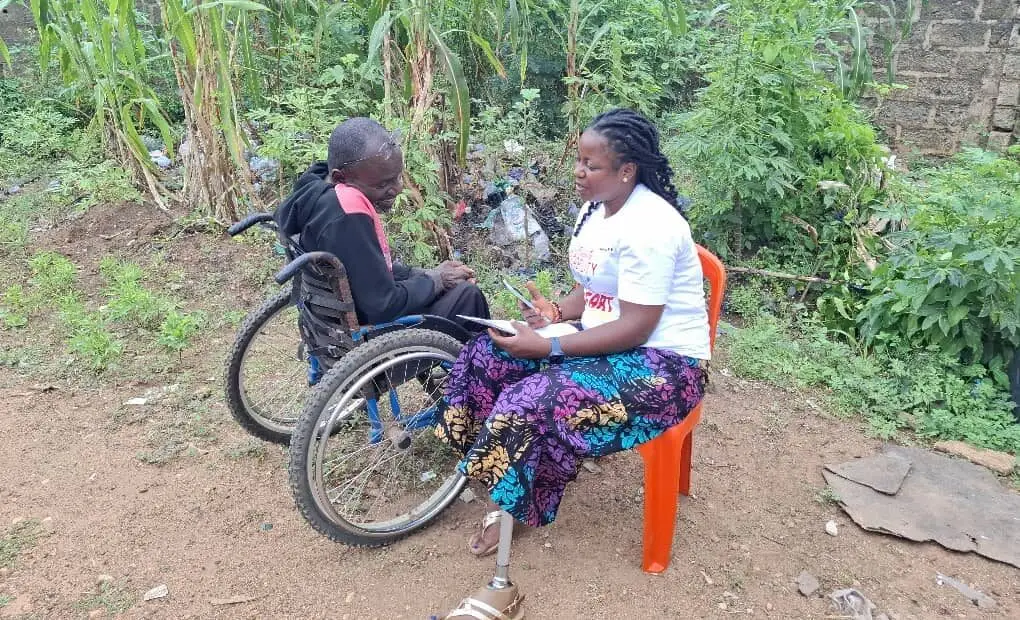
Nigeria is home to an estimated 25 million persons with disabilities. This is a market larger than many African countries’ entire populations, yet many digital platforms remain inaccessible to them. From government portals and banking applications to websites and online services, barriers such as inaccessible forms, missing image descriptions, and the lack of captioning continue to limit independent access to information and services.
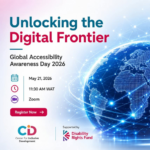
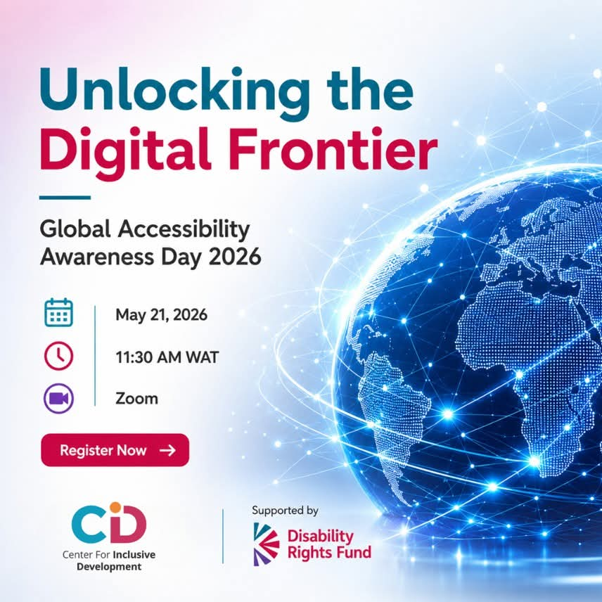
To mark the fifteenth Global Accessibility Awareness Day (GAAD) on May 21, 2026, the Center for Inclusive Development (CID), with support from the Disability Rights Fund (DRF), convened a virtual event titled “GAAD 2026: Unlocking the Digital Frontier.”
The session was facilitated by Isaiah Ude, Project Lead for the DRF-funded Enhancing Digital Accessibility for Persons with Disabilities in Nigeria project. It brought together participants from civil society organisations, development actors, and disability communities across Africa.
The event focused on:
- Examining the current state of digital accessibility in Nigeria and the wider region.
- Identifying barriers that prevent persons with disabilities from accessing digital platforms and services.
- Exploring practical steps toward a more inclusive and accessible digital future.
The discussions highlighted that despite Nigeria being one of Africa’s largest internet markets, digital accessibility remains largely overlooked. Persons with disabilities continue to face barriers in accessing education, employment opportunities, healthcare information, financial services, and civic participation through digital platforms.
Accessibility expert Tracy Agbamu discussed the concept of digital accessibility, describing it as the practice of designing websites, applications, and digital content that can be used by everyone, regardless of disability. Drawing comparisons between physical and digital environments, she explained that inaccessible websites create the same exclusion as buildings without ramps, Braille signage, or sign language interpretation. “For people without disabilities, technology makes things easier. For people with disabilities, technology makes things possible.” Tracy stated.
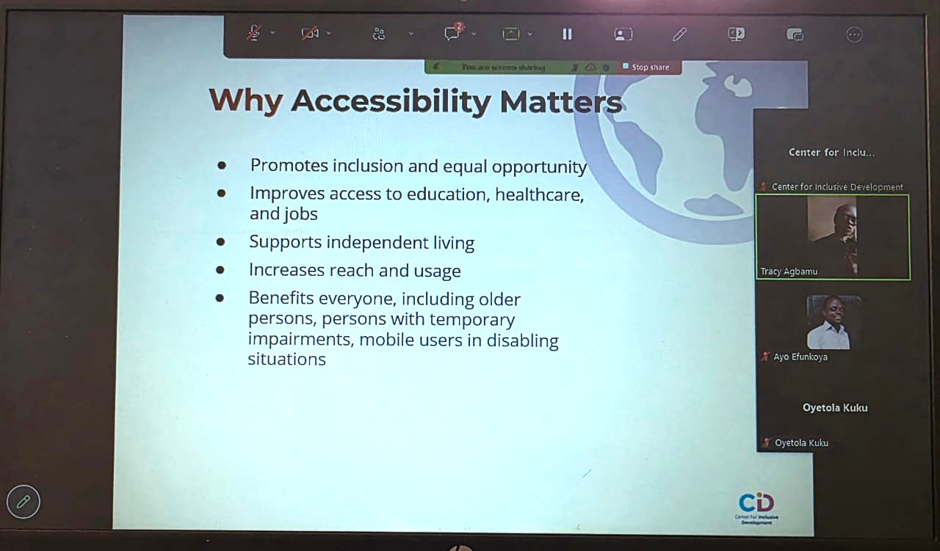
Assistive technology specialist Ayo Efunkoya provided an overview of the Web Content Accessibility Guidelines (WCAG), the internationally recognised standard for digital accessibility. He highlighted common barriers experienced by persons with disabilities, including images without alt-text, videos without captions, inaccessible navigation systems, and platforms that do not work effectively with assistive technologies.
The event also examined Nigeria’s policy landscape. While frameworks such as the Discrimination Against Persons with Disabilities (Prohibition) Act 2018 and NITDA’s Accessibility Guidelines provide a foundation for inclusion, participants noted that awareness and implementation remain limited. Many organisations are still unaware of their responsibilities regarding digital accessibility.
Contributions from participating organisations enriched the discussion. Oluwatobi Opadokun of the Center for Women’s Health and Information (CEHWIN) stressed that civil society organisations working to support marginalised groups must ensure that their own digital platforms are accessible. He argued that organisations cannot effectively champion inclusion while maintaining barriers that exclude persons with disabilities from information and engagement.
Anjkwi Mshelbwala of ActionAid highlighted the importance of extending digital inclusion efforts beyond urban centres. He pointed to rural ICT hubs as an opportunity to expand access to technology and information for persons with disabilities living in underserved communities, where connectivity and assistive technologies are often limited.
Participants from Mozambique shared perspectives from low-resource settings, emphasising that accessibility is most effective and affordable when integrated into digital products from the outset rather than added later. Their contributions reinforced the importance of designing with accessibility in mind from the beginning and involving persons with disabilities throughout the development process.
The session concluded with a shared commitment to strengthening digital accessibility through collaboration, advocacy, and capacity building. Participants called for stronger implementation of accessibility standards, increased training for developers and content creators, the inclusion of accessibility requirements in procurement processes, and greater involvement of organisations of persons with disabilities in policy development and digital design.
For CID, the event reinforced the importance of advancing digital inclusion as part of broader efforts to promote disability rights and equitable development. Through its project, Enhancing Digital Accessibility for Persons with Disabilities in Nigeria, supported by the Disability Rights Fund, CID continues to work with organisations of persons with disabilities, technology stakeholders, and policymakers to promote accessible digital environments.
As Nigeria’s digital economy continues to grow, accessibility must be recognised as a fundamental component of inclusion and equal opportunity. Building a digital future that works for everyone requires commitment from governments, civil society, the private sector, and technology professionals. Only through collective action can the promise of the digital age become a reality for all.