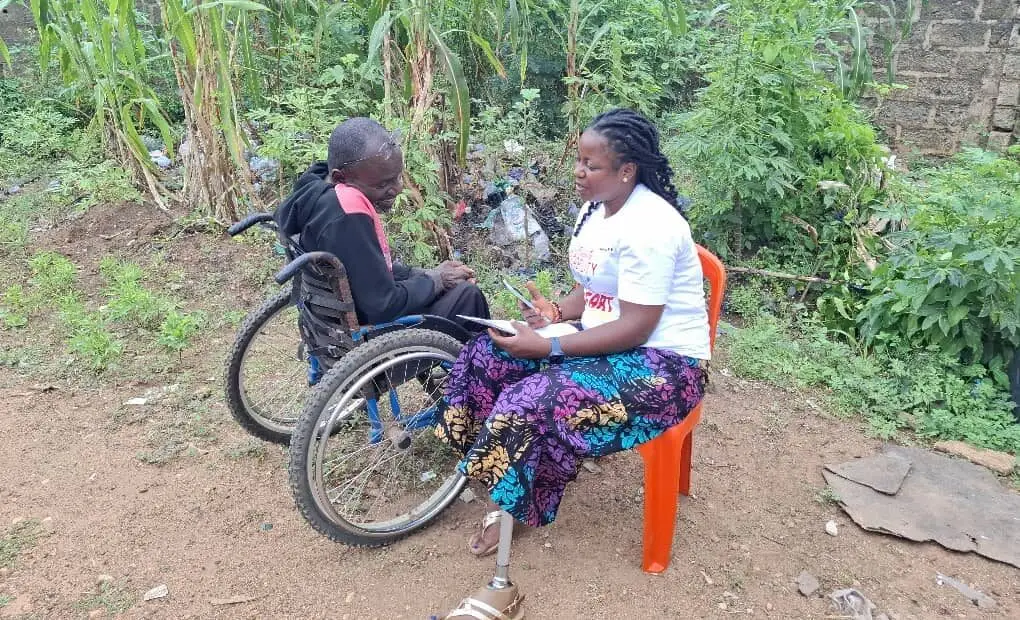
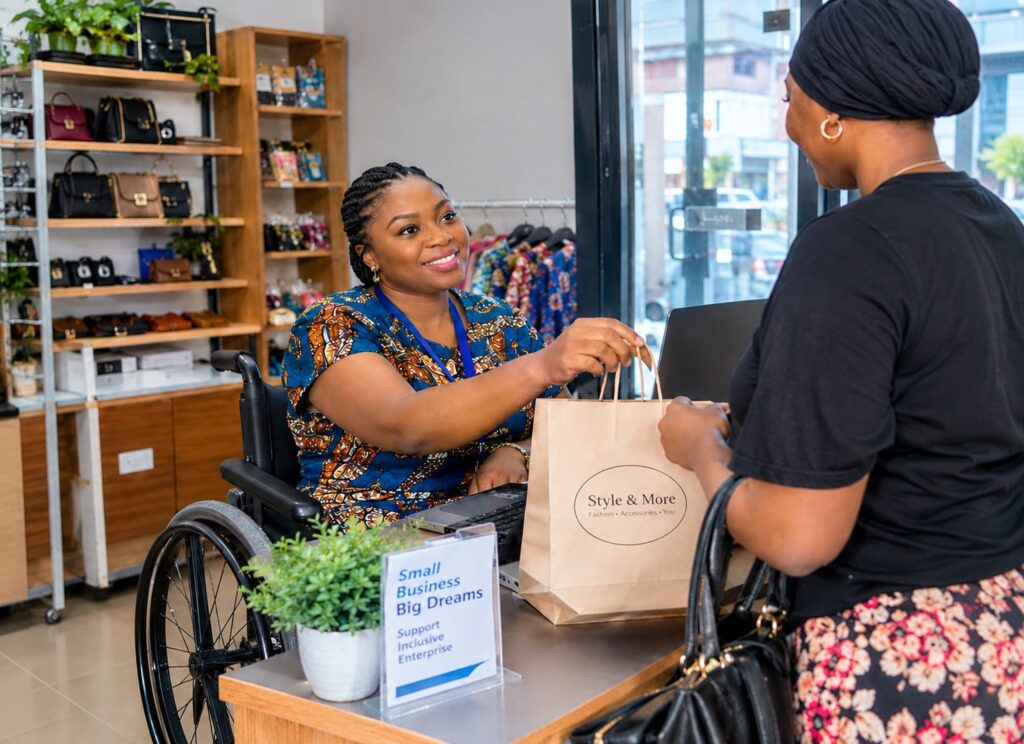
Economic independence is often viewed through the lens of income, employment and financial stability. However, for many women with disabilities, it represents something much deeper, the ability to make choices, participate in decisions that affect their lives and live with dignity.
Having access to economic opportunities can influence how individuals participate within their families, communities and society. When people have control over their own resources, they are better positioned to make decisions, pursue opportunities and advocate for their rights.
For women with disabilities, economic empowerment is not only about earning an income. It is also connected to confidence, independence, inclusion and the ability to challenge discrimination or harmful situations.
Economic Exclusion and the Barriers Facing Persons with Disabilities
Across Nigeria, persons with disabilities continue to face barriers that affect their participation in education, employment and entrepreneurship. These barriers are not caused by disability itself but often by inaccessible systems, limited opportunities and social attitudes that prevent equal participation.
The World Bank report, Economic Cost of Excluding Young Persons with Disabilities in Nigeria, highlights the significant impact of these barriers on individuals and the wider economy. The report estimates that Nigeria loses approximately ₦416.8 billion ($288 million) annually in productivity losses among young persons with disabilities aged 15–35 due to exclusion from education, skills development and employment opportunities.
The report further shows that only 37.1% of young persons with disabilities are employed, while 51.5% are inactive in the labour market. Among those who are working, many continue to experience economic hardship, with an average monthly income of about ₦30,639, while 71% earn below the national poverty line.
These figures demonstrate that economic exclusion is not only an individual challenge; it is a barrier to national development.
When people with disabilities are unable to access education, jobs, finance or entrepreneurship opportunities, society loses valuable skills, ideas and contributions.
The Connection Between Economic Dependence and Gender-Based Violence
Gender-based violence (GBV) is often associated with physical or sexual violence. However, violence can also take economic forms.
Socio-economic violence includes denying a person access to income, resources, education or employment opportunities. When individuals are prevented from becoming financially independent, their ability to make decisions and exercise control over their lives may be affected.
For women with disabilities, economic dependence can increase vulnerability. Reliance on others for basic needs, combined with social barriers, may make it more difficult to report abuse, seek support or leave harmful situations.
CID’s training materials on preventing gender-based violence against women with disabilities highlight that women with disabilities may face increased risks due to factors such as dependence on caregivers, communication barriers, disbelief when reporting abuse and social isolation.
This makes economic empowerment an important part of creating safer and more inclusive communities.
A Voice From Ekiti: Why Economic Independence Matters
Mr Olajide Funsho Benjamin, Executive Director of Disability Not A Barrier Initiative ( DINABI) and CID’s partner in Ekiti State, explained the relationship between economic independence and the ability of women with disabilities to make choices.
“The reasMr Olajide Funsho Benjamin,on why I should be subjected to somebody is simply because when I am not independent, when I rely on others before I can survive, it means that if that person tells me to keep quiet, I have to keep quiet.”
He explained that financial dependence can affect a woman’s ability to challenge unfair treatment or abuse.
“The moment a woman with a disability is not economically buoyant, she is at the mercy of her husband or partner. But when women with disabilities are economically empowered, when they have their own work and income, they have the confidence to say, ‘No, you are discriminating against me. No, you are harassing me. No, you are sexually abusing me.’”
His message reflects a wider reality: economic empowerment gives women greater confidence, voice and control over decisions affecting their lives.
Strengthening Knowledge, Confidence and Opportunity
Recognising the link between economic empowerment and GBV prevention, the Center for Inclusive Development (CID) implemented the Strengthening the Prevention of Gender-Based Violence Against Women with Disabilities Project.
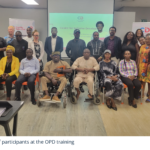
The project was implemented across Gombe, Ekiti and Osun States, focusing on strengthening knowledge, leadership and advocacy skills among women with disabilities.
The training explored important issues around disability inclusion, GBV prevention, leadership and advocacy. It promoted a rights-based understanding of disability, recognising that disability does not mean inability and that many barriers exist because environments and systems are not designed to include everyone.
Participants also discussed practical approaches to preventing GBV, including knowing their rights, speaking up early, accessing support networks, reporting violence and building financial independence.
Economic empowerment was recognised as a key part of prevention because women who have access to skills, employment opportunities and financial resources are better positioned to participate fully in society and make informed choices.
Access to Finance: A Key Part of Inclusion
Economic empowerment cannot happen without access to financial opportunities.
The World Bank report highlights that access to credit remains a challenge for many persons with disabilities. Only 6.9% of young persons with disabilities were able to obtain credit from financial service providers, limiting opportunities for entrepreneurship and business growth.
This shows why financial inclusion must be designed to include persons with disabilities not as an afterthought, but as customers, entrepreneurs and contributors to economic growth.
Creating inclusive financial systems requires collaboration between financial institutions, policymakers, development organisations and disability organisations to remove barriers and expand opportunities.
Building a Future Where Women With Disabilities Can Thrive
Economic independence does not remove every challenge faced by women with disabilities. However, it creates a stronger foundation for dignity, confidence and participation.
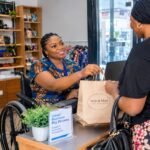
Women with disabilities are not defined only by the barriers they face. They are entrepreneurs, professionals, leaders, caregivers and active contributors to their communities.
Creating an inclusive society means ensuring that women with disabilities have equal access to education, employment, entrepreneurship opportunities and financial resources.
True empowerment is not about providing support to people with disabilities while leaving barriers unchanged. It is about creating systems where they can participate fully, make decisions, lead and live with dignity.