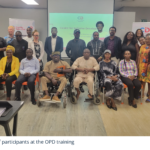
In November 2025, civil society leaders, disability advocates, gender justice experts, corporate representatives, researchers, government and development practitioners gathered for a conversation that challenged how we think about disability inclusion – the inaugural edition of “What Next,” a quarterly learning series convened by the Center for Inclusive Development (CID) designed to bridge movements and challenge assumptions about how change happens.
Nigeria has made legislative progress on disability rights in recent years, with the Discrimination Against Persons with Disabilities (Prohibition) Act of 2018, a landmark legislation many hoped would transform lives. Yet for too many Nigerians with disabilities and particularly for women and girls, the gap between legal frameworks and lived reality remains far and in between. This event asked simple questions like, What if disability inclusion has been approaching the problem all wrong?
The Problem with Checkboxes
Dr. ChiChi Aniagolu-Okoye, Regional Director for West Africa at the Ford Foundation, delivered the keynote address that set the event’s intellectual tone. Dr. Aniagolu-Okoye words were blunt and memorable: “Check-boxing inclusion gives visibility without power, presence without influence, and acknowledgement without justice.”
This phrase captured something advocates have long sensed but rarely articulated so clearly. Organizations can proudly report they have disability inclusion policies, they have consulted persons with disabilities, they have included diversity metrics in their reports, and ramps have been made for accessibility. And yet, the fundamental power dynamics remain unchanged. Persons with disabilities, especially women, remain largely absent from decision-making tables, their voices peripheral even in discussions about them.
Dr. Aniagolu-Okoye argued that this isn’t a failure of implementation, it is a failure of conceptualization. Disability inclusion is frequently treated as a compliance obligation, something to be documented and reported rather than a structural transformation requiring genuine redistribution of power. The result is inclusion that looks good on paper but changes little in practice.
Her address emphasized that disability must be understood as embedded within broader systems of power, policy, and social norms. This framing matters because it points toward solutions that go beyond accessibility features and awareness campaigns toward fundamental questions about who holds power and how decisions are made.
The Intersectionality Imperative
Perhaps the most striking aspect of the keynote was its insistence on intersectionality as more than an academic concept. Dr. Aniagolu-Okoye reminded the us that “a woman with disabilities is not simply a woman and a disabled person; her experiences are shaped by multiple, intersecting forms of discrimination.”
This observation has implications for advocacy strategy. When disability rights work operates in isolation, it inevitably fails to capture how gender, class, geography, ethnicity, and other factors compound exclusion. A woman with disabilities living in a rural community faces obstacles fundamentally different from those facing an urban professional with the same disability. Their advocacy needs, strategic priorities, and pathways to justice cannot be addressed through the same approaches.
The implications extend to how movements organize and who they center. If disability advocacy centers primarily serve middle-class, urban men with disabilities, historically the most visible voices in many movements, then the concerns of women, rural populations, and those with intersecting marginalized identities will be treated as minor. True inclusion requires movements that reflect the diversity of the populations they claim to represent.
Learning from Feminism’s Playbook
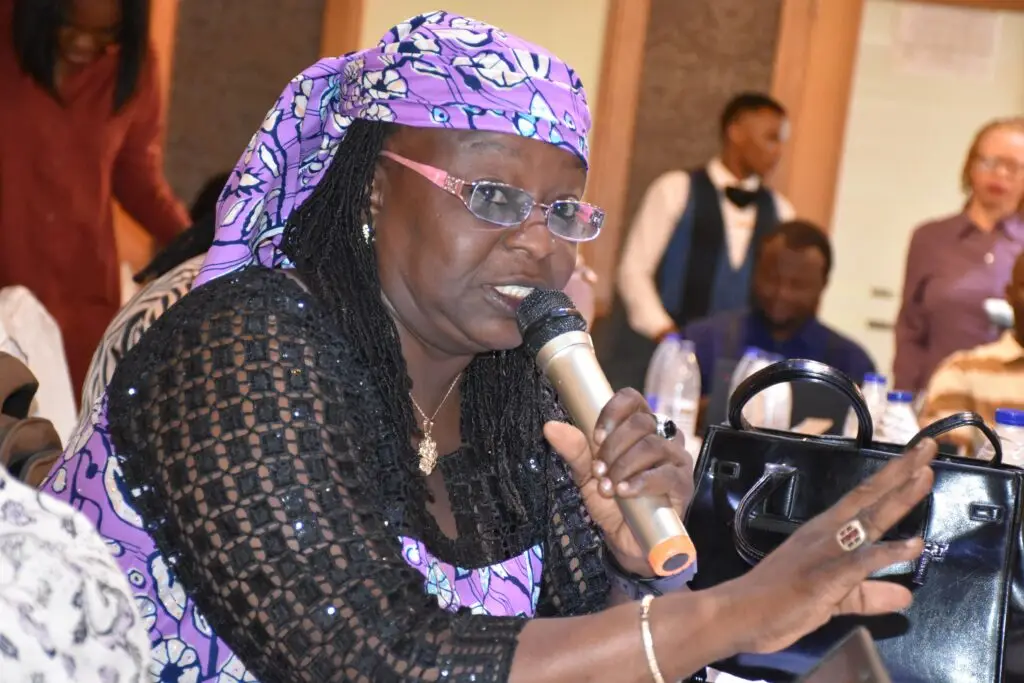
The panel discussion that followed the keynote explored how the disability movement might learn from the strategies and evolution of the gender justice movement. The conversation brought together perspectives from women’s rights organizing, corporate Nigeria, and long-standing civil society leadership.
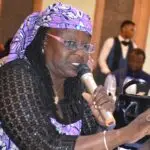
Hajiya Saudatu Mahdi of the Women’s Rights Advancement and Protection Alternative (WRAPA) offered insights drawn from decades of feminist organizing in Nigeria. Her central argument was both simple and revolutionary: “Disability should be seen as a constituency, not just a label.” This reframing matters enormously because it shifts disability from an object of charity or concern to a site of political agency and collective action.
Mahdi reflected on how the women’s movement in Nigeria achieved its victories, not through isolated advocacy but through the gradual building of collective identity and solidarity. Women recognized themselves as part of a shared struggle, connected their individual experiences to systemic patterns, and organized collectively to demand change. The disability movement, she argued, must pursue a similar path, building internal solidarity while also connecting to broader social justice movements rather than operating in silos.
Her words carried particular weight given the current moment in Nigeria, where gender legislation remains contested and women’s rights face organized resistance. Mahdi’s experience suggests that movements succeed not by waiting for permission but by building power from below and connecting their specific issues to universal values of dignity and rights.
The Corporate Trajectory
Esther Akinnukawe, Chief Human Resource of MTN Nigeria, provided a perspective often absent from civil society conversations: the private sector’s experience with inclusion. Her remarks revealed parallels between corporate gender inclusion efforts over the past decades and current disability inclusion initiatives.
“When gender inclusion started, it was largely about compliance, and that was necessary at the time,” Akinnukawe observed. This acknowledgement that compliance-driven approaches serve a genuine purpose will likely reassure disability advocates frustrated by minimal legal requirements. Compliance creates entry points. It establishes baseline expectations. It gives those within institutions who want to champion change something to point to.
But Akinnukawe also described what happened next: as women entered corporate spaces and demonstrated their capabilities, the rationales for inclusion shifted. “When women came in, they demonstrated value, and organizations began to see the business case.” This observation suggests a pathway for disability inclusion that moves beyond arguing for rights to demonstrating impact. Private sector institutions respond strongly to performance outcomes, and advocates who can document how disability-inclusive policies improve results will find more receptive audiences than those appealing solely to justice considerations.
This doesn’t mean abandoning rights-based frameworks, far from it. Rather, it suggests that multiple arguments can coexist and appeal to different audiences. Rights arguments move consciences; impact arguments move institutions. An effective strategy requires both.
The Hard Work of Implementation
Ene Obi, former Country Director of ActionAid Nigeria, brought the conversation down to the terrain of implementation. Her contributions reminded us that legislative victories, while necessary, are never sufficient. “Having a law or a commission is not the same as using it; the question is how it is held accountable.”
This observation cuts to the heart of a challenge facing disability rights in Nigeria. The country has made significant legal progress, yet enforcement remains inconsistent, institutions lack capacity, and civic engagement with available mechanisms remains limited. Laws exist on paper while the conditions they were designed to address persist in practice.
Obi also emphasized the dangers of movement dependency on individual leaders. “One person cannot make a movement,” she argued, calling for intentional leadership development and internal accountability structures. Many disability movements globally have struggled with this challenge, the visibility of a few charismatic advocates masking the absence of deeper organizational capacity and bench strength. Building movements that outlive individual leaders requires deliberate investment in the next generation of advocates and organizers.
Her contribution reinforced a theme echoed throughout the evening: change requires persistence, collective action, and strategic engagement with political and institutional processes. Progress is neither automatic nor inevitable. It must be constructed, defended, and expanded through sustained effort.
The Evidence Imperative
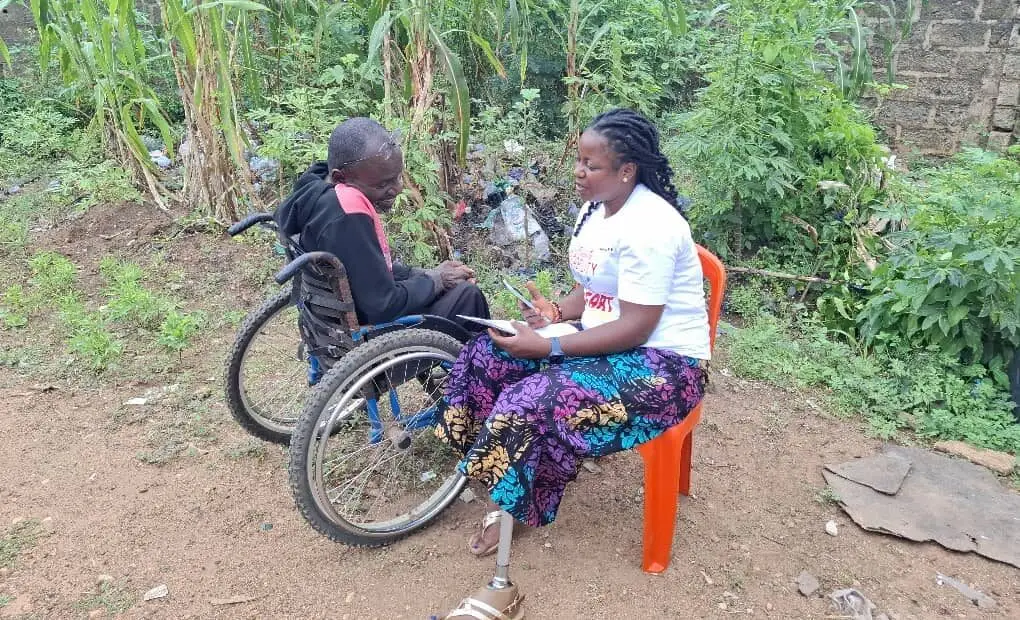
Throughout the event, participants emphasized the role of evidence and research in shaping advocacy and informing programming. CID’s own research on gender-based violence against women with disabilities was presented, grounding abstract discussions in concrete findings about the specific vulnerabilities facing women with disabilities.
This emphasis on evidence reflects a broader strategic awareness among contemporary advocates. Funding decisions, policy shifts, and institutional commitments increasingly require documented impact and systematic findings. While lived experience remains central to disability rights advocacy, one cannot separate the movement from the people whose lives are at stake; effective advocacy increasingly requires combining personal narrative with rigorous research.
For CID and similar organizations, this suggests continued investment in generating, synthesizing, and applying evidence. Research must not remain confined to academic journals but must be translated into accessible formats suitable for advocacy, policy engagement, and public communication.
Moving Forward
The conversations at What Next pointed toward a clear direction for disability rights advocacy: the movement must move beyond visibility toward influence, beyond presence toward power, beyond representation toward decision-making.
This reframing matters because it changes what success looks like. An event that brings together over 50 stakeholders is valuable, but its value lies in what happens next in the connections formed, the strategies developed, and the actions taken. A policy document establishing inclusion benchmarks is useful, but only if those benchmarks are enforced and their violations sanctioned. A law protecting disability rights is essential, but only if affected individuals can access justice when those rights are violated.
The insights from gender movement strategies offer a roadmap, but one that must be adapted rather than copied wholesale. Every movement develops within specific political, cultural, and institutional contexts. What works in one setting may require significant modification in another. The challenge for Nigeria’s disability movement is not to replicate the gender movement’s trajectory but to learn from its strategies while remaining responsive to local conditions and the specific experiences of Nigerians with disabilities.
Beyond the Event
The inaugural What Next event concluded, but the conversations it started need to continue. The format, an evening of intersectional dialogue designed to bridge movements and deepen strategic understanding, represents something valuable in Nigeria’s civil society landscape. Advocates too often work in silos, addressing specific issues without connecting to broader struggles for justice and rights. Events that create space for cross-movement learning address a genuine need.
The disability rights movement in Nigeria stands at an inflection point. Legislative foundations exist, awareness has grown, and a new generation of advocates is emerging. The question now is whether the movement can make the strategic shifts necessary to transform legal rights into lived realities. Events like What Next suggest that the conversation is already underway. The task now is to expand it, deepen it, and translate it into action.
This blog post is based on the Center for Inclusive Development’s report of the What Next event held November 19, 2025, in Abuja. The views expressed reflect the speakers’ contributions and the author’s synthesis of the discussions.