Nigeria has not been short of commitments on disability and work. The Discrimination Against Persons with Disabilities (Prohibition) Act, signed in January 2019, reserves at least five percent of jobs in public organisations for persons with disabilities and set up the National Commission for Persons with Disabilities to enforce it. In January 2025 the Commission launched the framework for the National Access to Work Scheme, which is meant to supply assistive tools to persons with disabilities employed in the private sector. We at the Center for Inclusive Development support both and want them delivered. But they share a starting point, which is a person who already has, or is about to get, a job with an employer. Many of the young people we work with are not in that position. For them the realistic route is a business of their own, and that is where they meet a different barrier.
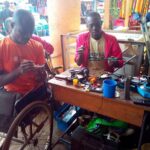
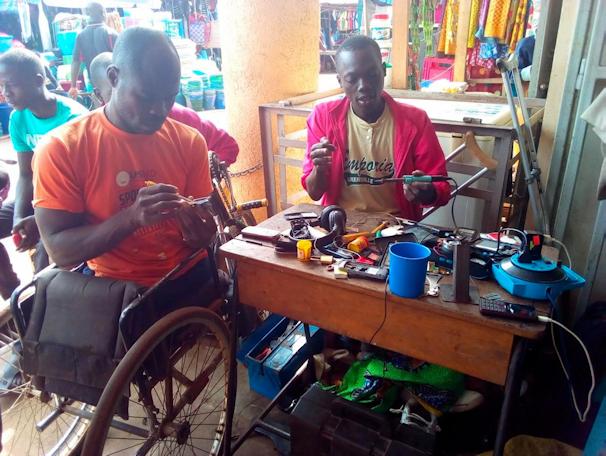
We hear the same story again and again. Someone finishes a course in tailoring, phone repair or catering and has a skill they can actually use. Then they need a first industrial sewing machine, some opening stock, a registration fee or a month’s rent on a stall, and the whole thing stalls. They can’t raise the money, nobody will lend it to them, and the skill sits unused until the person shows up in the statistics as unemployed.
The fullest account of this gap is the World Bank’s 2025 study, Economic Cost of Excluding Young Persons with Disabilities in Nigeria. Using an International Labour Organization model and the 2023 Nigeria Living Standards Survey, the authors estimate that Nigeria loses about ₦3.77 trillion a year, roughly 2.5 billion dollars, by keeping the working-age population of persons with disabilities out of work. For those aged 15 to 35, the yearly loss is about ₦416.8 billion, or 288 million dollars.
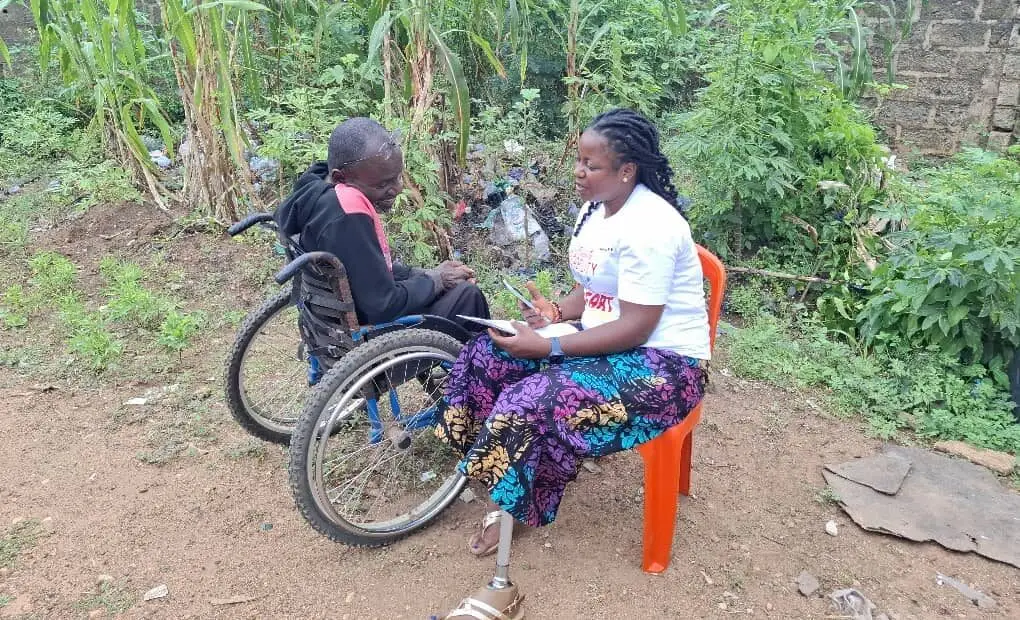
The survey covered 3,552 young persons with disabilities in all 36 states and the Federal Capital Territory. Only 37.1 percent were employed and 51.5 percent were outside the labour force altogether. Those with income earned about ₦30,639 a month, around 21 dollars, and seven in ten lived below the poverty line. Among 15 to 24 year olds with disabilities, nearly half were not in education, employment or training, against roughly one in ten of their peers without disabilities. Arguments over the quota tend to imagine a queue of qualified applicants waiting for employers to comply. The figures suggest many have dropped out of that queue long before any employer is involved.
Self-employment runs through the findings. The report says young people with disabilities often start businesses because the formal job market won’t have them, rather than because it was their first plan. Only 6.9 percent of respondents had taken a loan in the year before the survey. The World Bank reads that as a problem of access, and lists the causes: no collateral, no formal work history, no tax identification number or Corporate Affairs Commission registration, and lenders who see disability itself as a credit risk.
There is a fair objection here. Pushing loans at people the financial system has already turned away could just produce defaults and debt, because a loan doesn’t supply collateral, a registered business, a credit record or customers. We agree, which is why we aren’t arguing for money alone. What we have seen work, and what the evidence supports, is credit designed for borrowers with no collateral, paired with help registering the business, basic bookkeeping and advice, and a way to reach buyers. The report makes a similar point about training. Programmes are often too short, badly matched to different disabilities and cut off from the market, so graduates leave with a certificate and no tools, start-up money or mentor. Training without follow-through achieves very little, and credit without support can leave a borrower worse off.
Against that background the quota matters but cannot carry the load. It applies mostly to public sector hiring, enforcement has been weak, and it does little for the many who work for themselves or hope to.
Read Also: The Loan That Almost Never Comes
The Access to Work Scheme starts from the same place. The Commission launched its framework in January 2025 with TAF Africa and Sightsavers, and the aim is to put assistive tools in the hands of workers in private employment. At the launch, the Executive Secretary said the first beneficiaries would receive their awards within six months. We have found no public record of who has received support or how much has been spent, so it is too early to say how well it is working. The framework says the scheme will be funded mainly from the Commission’s annual budget, which, as the delivery section below shows, is small. And it only reaches people who already have an employer. The tailor or phone repairer described earlier needs the same kind of help, a machine, a toolkit, opening stock, and has no employer to receive it through. We would argue that the scheme’s logic, tools delivered through partnerships of government, private sector and civil society, can be carried across to self-employment, alongside credit and business advice.
The World Bank’s recommendations point the same way. It wants the Commission to enforce the quota properly, including annual disclosure of disability employment figures by listed companies. It also wants a parallel push on enterprise finance: blended finance grants and low-interest loans from the Central Bank for young entrepreneurs with disabilities, and a set share of credit in a revised National Financial Inclusion Strategy, which the report says currently leaves them out.
The costings show where the money would do most. Moving from exclusion to participation would take between ₦1.01 trillion and ₦3.30 trillion across education, skills, assistive technology and economic empowerment. Empowerment, meaning loans and grants for self-employment, is the biggest line, from ₦543.09 billion at the low end to ₦2.72 trillion at the high end.
Delivery is lagging. Twenty-seven of the 36 states have passed disability laws, but only 15 have created an agency to implement them. The Commission, which must now also roll out the Access to Work Scheme, was allocated ₦3 billion in the 2024 budget and ₦2.1 billion in 2025. Those are small sums for a mandate covering millions, and the report notes they were appropriations, with no confirmation that the money was spent. The National Accessibility Regulation for the built environment, launched in December 2023, is still unenforced and undomesticated, and there is no digital accessibility standard, which leaves many people locked out of the cashless economy that most businesses now depend on.
None of this is a case against the quota or the scheme. Enforce the one and deliver the other. But treat them as tools among several, and pair them with credit people can actually get, business support that continues after the loan, simpler registration, and financial products built for those mainstream lenders have written off. By the World Bank’s estimate, Nigeria already pays ₦3.77 trillion a year to keep things as they are. The country can keep absorbing that cost or start spending to end it. We think it should be the second, and we would start with the young person who has a skill and no way to fund the first month of trading.