
By Publisher
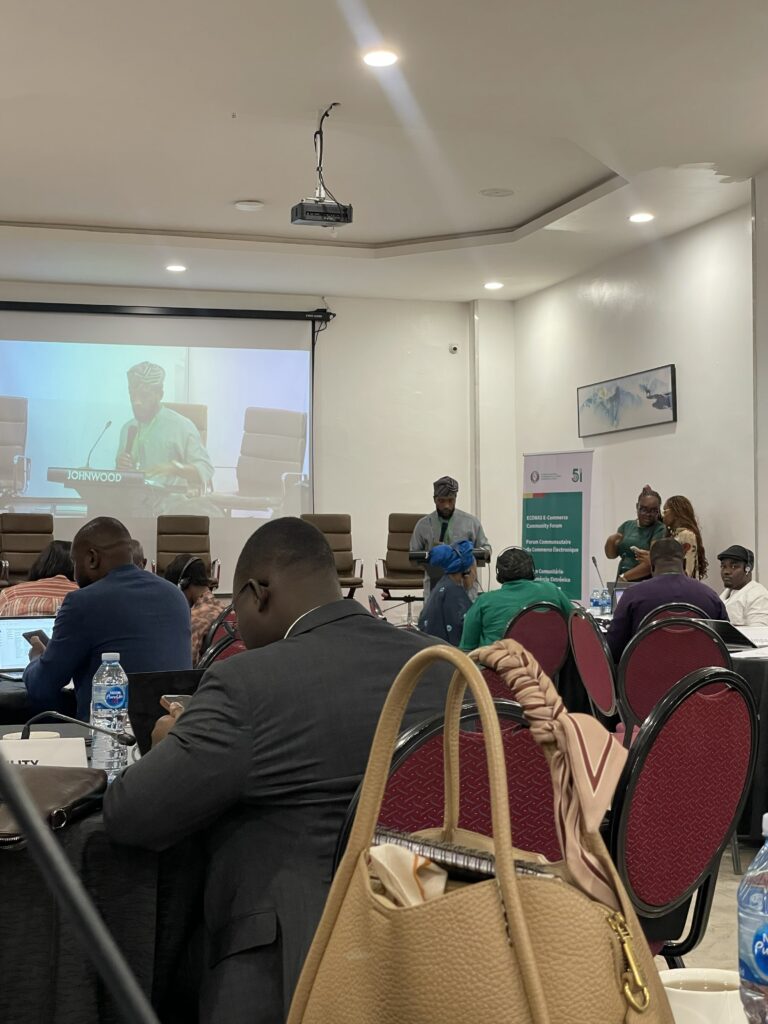
Last Month, the Center for Inclusive Development (CID) joined the ECOWAS E-Commerce Community Forum in Abuja, convened by the ECOWAS Commission’s Directorate of Trade. Government officials from Member States, development partners, private companies and civil society groups met to review a new regional study and Action Plan on online trade for women, young people, persons with disabilities and small traders.
The forum came at an important moment for the region. ECOWAS adopted its E-Commerce Strategy in 2023 and named persons with disabilities in its goal on inclusion. The regional study presented at the forum, supported by the Western Africa Regional Digital Integration Program, found that many online businesses in the region have never consulted persons with disabilities and that few meet international accessibility guidelines. In response, the draft Action Plan proposes a regional accessibility standard for digital platforms, along with a requirement that persons with disabilities take part in designing them. Since work on that standard is about to begin, the choices made now will shape what platforms across West Africa must provide for years to come.
On the same day, the Commission presented its Regional Disability Data Framework, which noted that official figures in the region still do not reflect the real number of persons with disabilities. Sound policy depends on sound evidence, and this is where CID’s work added value to the discussion.
Under the Enhancing Digital Accessibility for Persons with Disabilities in Nigeria (EDAPDN) project, supported by the Disability Rights Fund, CID carried out a national study of digital accessibility. We tested 80 widely used platforms, surveyed persons with disabilities and technology professionals, and reviewed how 20 institutions train the people who build these platforms.
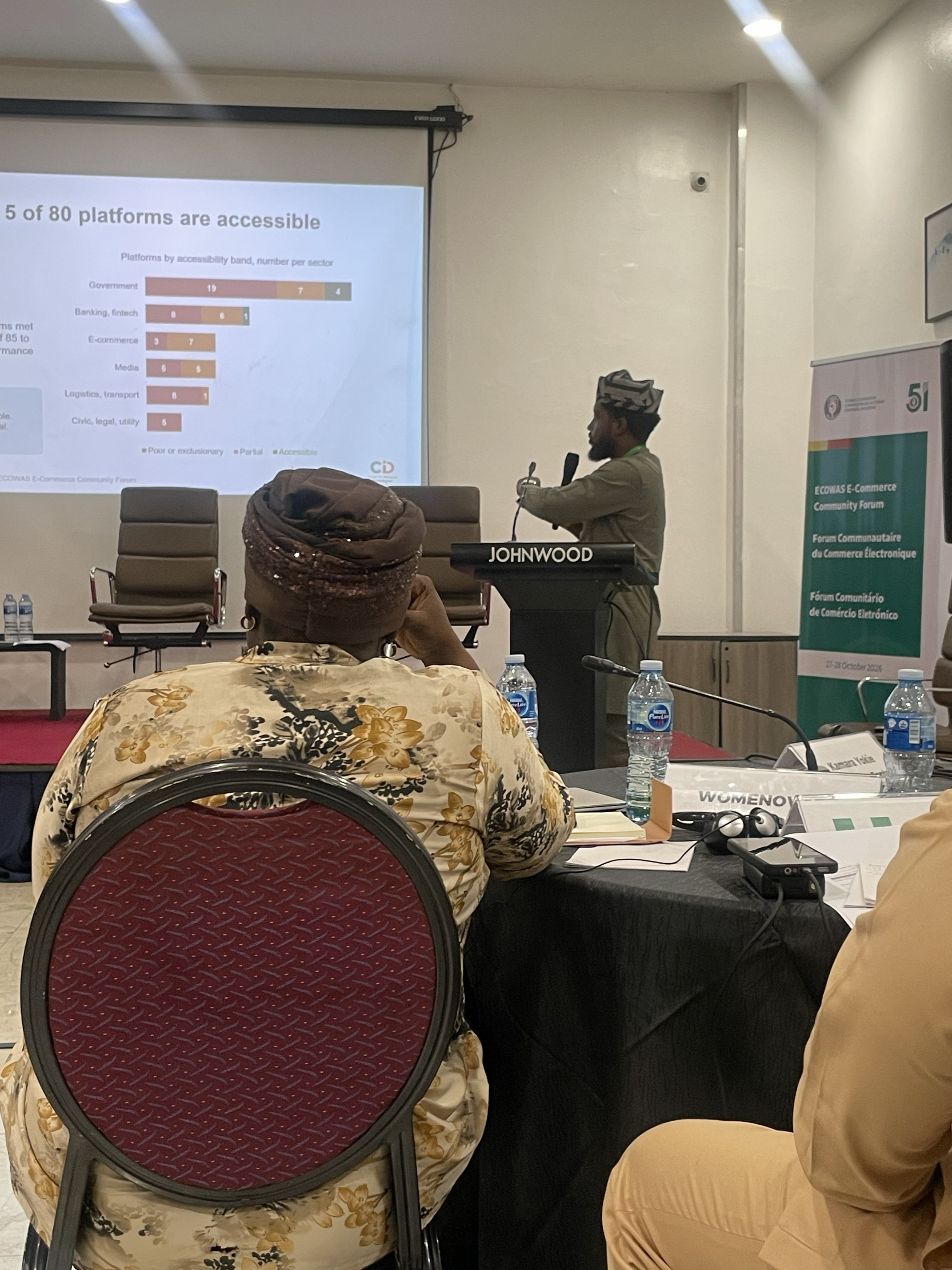
The CID project lead attended the forum and presented this work in the session on online trade initiatives, alongside UNCTAD and Adaptive Atelier. The presentation showed that only five of the 80 platforms we tested were accessible to persons with disabilities, and that none of the ten online marketplaces in the study was fully accessible. In live tests, people with visual impairments took more than nine times longer than others to complete simple tasks online. Eight in ten persons with disabilities we surveyed had failed to complete an important task online, and many of them lost money as a result.
The presentation paid particular attention to payments. The payment gateways used by thousands of Nigerian online shops are only partly accessible, meaning every shop relying on them faces the same barrier at checkout. A trader with a disability may have every skill needed to sell online and still depend on someone else to receive payment.
Our study also points to what is holding progress back. Most of the technology professionals we surveyed had never heard of the international accessibility guidelines, and none of the 20 training institutions we reviewed teach them. Cost on the other hand, was rarely the reason given, as most professionals said their clients simply do not ask for accessibility. Even so, 62% said they would follow a national standard if one were in place, which shows there is real willingness to act once clear direction is given.
“Training traders matters, but if the platforms and payment systems they use are not accessible, persons with disabilities will still be left out,” said Isaiah Ude, EDAPDN project lead.
CID further called for one accessibility standard covering online shops and payment platforms across the region, for accessibility to be written into the rules payment providers set for the businesses they serve so that it reaches every merchant, and for training on assistive technology to be part of the digital skills programmes Member States already run.
The presentation drew strong interest from participants, who asked about the study and how a similar review could be carried out in their own countries. That conversation continued into the group sessions, where participants worked on the forum’s recommendations.
The recommendations that came out of the forum carry many of the points CID raised. They call for digital accessibility to be built into online trade and digital policies from the planning stage, and for platforms and services that meet the needs of persons with disabilities. They encourage partnerships with businesses, banks, telecom operators and logistics firms to remove barriers, and they ask for disability inclusion and accessibility measures to be monitored and their impact assessed. They also place accessibility, persons with disabilities, young people and informal cross-border traders at the centre of online trade in the region, and propose a national trust mark alongside closer work between governments and financial institutions that offer opportunities to persons with disabilities.
For CID, the forum showed how evidence gathered in Nigeria can help shape policy for the whole region. We will follow the development of the regional accessibility standard closely and remain ready to support the ECOWAS Commission and Member States with our findings and experience.
We thank the ECOWAS Commission for the invitation, and the Disability Rights Fund for supporting our research.